
Jurabibliotek Logo Jurabibliotek Logo
Log ind
    Indstillinger
    Tekststørrelse
    Tegnafstand
    Linjeafstand
    Tema

    AI-assistent

    Vis tips
      • Coverpages and colophon
      • Contents (PDF version only)
      • Foreword
    • Chapter 1. Introduction to conflict resolution in Denmark (Page 13 – 21)
      • 1. The place of Danish law in international law
      • 2. Legislation on arbitration and the UNCITRAL Model Law
      • 3. Sources of law
      • 4. Danish contract law
      • 5. Introduction to the arbitration institutes and the ad hoc system
      • 6. The arbitration environment in Denmark
      • 7. The structure of the court system
      • 8. Advocates and other legal advisers
    • Chapter 2. The relationship between arbitration and the ordinary courts (Page 22 – 28)
      • 1. Introduction
      • 2. Defining the jurisdiction
        • 2.1. The jurisdiction of the courts pursuant to Section 8
          • 2.1.1. The courts’ competence after the commencement of the arbitration proceedings
          • 2.1.2. The courts’ competences prior to the arbitration proceedings
      • 3. Jurisdiction
        • 3.1. The courts’ examination of jurisdiction pursuant to Section 16
      • 4. The courts’ own examination
    • Chapter 3. The commencement of arbitration proceedings (Page 29 – 38)
      • 1. Introduction
      • 2. The procedural rules for arbitration
      • 3. The rules applicable on the merits
      • 4. The legal effects of the initiation of arbitration proceedings
      • 5. The parties
      • 6. The respondent’s answer
      • 7. New claims and counterclaims
      • 8. Preliminary proceedings at the DIA
    • Chapter 4. The appointment and confirmation of arbitrators (Page 39 – 67)
      • 1. The number of arbitrators
      • 2. The party autonomy
      • 3. Considerations for the appointment of arbitrators
      • 4. Special requirements for appointing the president or a sole arbitrator
      • 5. The availability of the arbitrator
      • 6. Appointment of arbitrators who are judges of the ordinary courts
      • 7. Arbitrators’ independence and impartiality
        • 7.1. What do independence and impartiality mean?
        • 7.2. The arbitrator’s duty of disclosure
        • 7.3. The sources of law on assessing the impartiality and independence and examples from practice
          • 7.3.1. The Danish Arbitration Act
          • 7.3.2. Examples from case law
          • 7.3.3. Other sources of law
      • 8. The right to challenge
      • 9. Replacement of an arbitrator
    • Chapter 5. Provision of security (Page 68 – 74)
      • 1. Introduction
      • 2. For what costs is a deposit provided?
      • 3. Who pays the deposit?
        • 3.1. Special agreements
        • 3.2. If the parties do not pay
        • 3.3. If the respondent pays but the claimant does not
        • 3.4. If the claimant pays but the respondent does not
        • 3.5. Payment of additional deposit
        • 3.6. Both parties pay the full deposit
        • 3.7. Payments of deposits with multiple claimants or respondents
      • 4. Security for the payment of legal costs etc.
    • Chapter 6. The taking of evidence (Page 75 – 96)
      • 1. Introduction
      • 2. Taking of evidence prior to the confirmation of the arbitrators – Interim arbitrators
        • 2.1. Introduction
        • 2.2. The procedure according to Appendix 2 of the DIA Rules
      • 3. Taking evidence after the appointment of the arbitral tribunal
        • 3.1. When should evidence be presented?
        • 3.2. Documentary evidence
        • 3.3. Disclosure
          • 3.3.1. Request for disclosure
          • 3.3.2. The arbitral tribunal’s decision on a request for disclosure
          • 3.3.3. The evidential significance of a disclosure order
          • 3.3.4. Disclosure by third parties
        • 3.4. Testimony from witnesses and the parties
        • 3.5. Written witness statements
          • 3.5.1. The drafting of written witness statements
          • 3.5.2. Presentation and examination of witness statements
        • 3.6. Oral statements
        • 3.7. Expert witnesses appointed by the parties
          • 3.7.1. Drafting the reports of expert witnesses
          • 3.7.2. Presentation and examination of reports of party-appointed experts
        • 3.8. Fees and reimbursement for parties’ experts and other witnesses
        • 3.9. Experts appointed by the arbitral tribunal.
        • 3.10. Inspection
        • 3.11. Objections to evidence
      • 4. The arbitral tribunal’s assessment of evidence
      • 5. The assistance of the ordinary courts in the taking of evidence
        • 5.1. Questioning witnesses
        • 5.2. Disclosure
        • 5.3. Referral to the Court of Justice of the European Union
    • Chapter 7. The arbitral tribunal’s handling of cases (Page 97 – 100)
      • 1. Introduction
      • 2. The preparatory meeting
      • 3. The agenda for the preparatory meeting
      • 4. The protocol/minutes – decisions taken at the preparatory meeting
    • Chapter 8. Oral hearing (Page 101 – 109)
      • 1. Introduction
      • 2. The initiation of the oral hearing
        • 2.1. Protocol and Minutes
        • 2.2. Open or closed meetings
        • 2.3. The absence of a party
        • 2.4. New claims, witnesses or documentation
      • 3. The presentation of facts at the oral hearing
        • 3.1. Presentation of the case
        • 3.2. Statements of parties and witnesses
      • 4. Inspections by the arbitral tribunal
      • 5. The concluding statements of the parties
      • 6. Closing the proceedings in order to make a final award
      • 7. Reopening the case before making a final award
      • 8. Mediating a settlement
    • Chapter 9. The arbitral award (Page 110 – 121)
      • 1. Introduction
      • 2. Different kinds of awards
        • 2.1. The final award
        • 2.2. Partial award
        • 2.3. Award on agreed terms
        • 2.4. Award in the event of the absence of a party
        • 2.5. Corrected award
        • 2.6. Additional award
        • 2.7. Interpretation award
      • 3. The general principles for arbitral awards
        • 3.1. Minimum requirements
        • 3.2. Clear language and consistent structure
        • 3.3. Deadline for compliance
        • 3.4. The conclusion of the award
        • 3.5. Scrutiny of the award
        • 3.6. Signing the award
      • 4. Making the award
      • 5. Publication of awards
    • Chapter 10. Costs (Page 122 – 130)
      • 1. The legal basis
      • 2. The costs of the arbitral tribunal
        • 2.1. Arbitrators’ fees
        • 2.2. Reimbursement of the arbitrators’ expenses
      • 3. Expenses of the DIA
      • 4. Allocation of costs between the parties
      • 5. Compensation for the costs of the parties
        • 5.1. The costs for advocates and legal representatives
        • 5.2. Other costs
      • 6. Procedural issues
      • 7. Proceedings before the ordinary courts
    • Chapter 11. Setting aside, recognition and enforcement (Page 131 – 145)
      • 1. Setting aside
        • 1.1. Resumption of proceedings pursuant to Section 37(5)
        • 1.2. Setting aside
          • 1.2.1. The capacity of the parties
          • 1.2.2. Invalid arbitration agreement
          • 1.2.3. Lack of involvement of a party
          • 1.2.4. Disputes outside the scope of the arbitration agreement
          • 1.2.5. The composition of the arbitral tribunal and the arbitral procedure
          • 1.2.6. The subject of the case is not capable of settlement by arbitration
          • 1.2.7. Public policy exception (ordre public)
        • 1.3. Judicial review
      • 2. Recognition and enforcement
        • 2.1. The legal basis
        • 2.2. The courts’ examination of arbitral awards
        • 2.3. The jurisdiction and procedure of the courts
        • 2.4. Enforcement of costs in arbitration cases
    • Chapter 12. Interim measures (Page 146 – 154)
      • 1. Introduction
      • 2. A party’s request for assistance pursuant to Section 9
      • 3. Decisions of an arbitral tribunal pursuant to Section 17
      • 4. Arrangement for emergency arbitrators
        • 4.1. Introduction
        • 4.2. The procedure pursuant to Appendix 3 of the DIA Rules
    • Annex 1. Unofficial Translation of the Danish Arbitration Act (Act No 553 of 24 June 2005 on arbitration as amended by Act No 106 of 26 February 2008, Section 40)
      • Danish Arbitration Act
        • Chapter 1. General provisions
        • Chapter 2. Arbitration agreement
        • Chapter 3. Composition of arbitral tribunal
        • Chapter 4. Jurisdiction of arbitral tribunal
        • Chapter 5. Conduct of arbitral proceedings
        • Chapter 6. Making of award and termination of proceedings
        • Chapter 7. Costs and security
        • Chapter 8. Recourse against award
        • Chapter 9. Recognition and enforcement of awards
        • Chapter 10. Entry into force etc.
    • Annex 2. Rules of arbitration procedure, Adopted by the Board of the Danish Institute of Arbitration and in force as from 1 May 2013
      • Introductory provisions
        • Organisation
        • The Arbitration Agreement
        • Communications
      • Commencing the arbitration
        • Statement of Claim
        • Registration Fee
      • Financial deposit
        • Financial Deposit at the Commencement of Arbitration, etc.
      • Statement of defence and counterclaims
        • Statement of Defence and Any Counterclaims
        • Claimant’s Reply to Counterclaim(s)
      • Consolidation, etc.
        • Consolidation and Additional Parties
      • Appointment and confirmation of arbitrators, etc.
        • Number of Arbitrators; President of the Arbitral Tribunal
        • Appointment and confirmation
        • Availability, Impartiality and Independence
        • Challenge of Arbitrators
        • Replacement of Arbitrators
      • Conduct of the arbitration
        • Referral to the Arbitral Tribunal; the Place of Arbitration
        • Jurisdiction of the Arbitral Tribunal
        • Procedural Language and Applicable Law
        • Fundamental Principles
        • Preparatory Meeting
        • Experts Appointed by the Arbitral Tribunal
        • Interim Measures
        • Oral Hearing
        • Closing of the Proceedings
      • The arbitral award
        • Form and Content of the Award
        • Decision as to the Costs
        • Arbitrators’ Fees
        • Liability for Costs
        • Scrutiny of the Award
        • Notification of the Parties, etc.
        • Award by Consent
      • Miscellaneous
        • Correction, Interpretation and Additional Award
        • Interim Arbitrator; Emergency Arbitrator
        • Waiver
        • Confidentiality
        • Archiving, etc.
        • Limitation of Liability
    • Appendix 1. Administrative Charge and Arbitrators’ Fees
      • Introduction
      • Administrative Charge
      • Arbitrators’ Fees
    • Appendix 2. Taking of Evidence prior to the Confirmation of the Arbitrators
      • Powers of the Interim Arbitrator
      • Application for Appointment of an Interim Arbitrator
      • Confirmation of Receipt of the Application
      • Appointment of the Interim Arbitrator
      • Place of the Interim Arbitration
      • Referral to the Interim Arbitrator
      • Conduct of the Interim Proceedings and the Decisions of the Interim Arbitrator
      • Financial Deposit and Costs
      • Appointment of Experts
    • Appendix 3. Interim Measures to Be Granted Prior to the Confirmation of the Arbitrators
      • Powers of the Emergency Arbitrator
      • Application for Appointment of an Emergency Arbitrator
      • Confirmation of Receipt of the Application
      • Appointment of the Emergency Arbitrator
      • Place of the Emergency Arbitration
      • Referral to the Emergency Arbitrator
      • Conduct of the Emergency Proceedings
      • Decision of the Emergency Arbitrator
      • Binding Effect of the Decision
      • Financial Deposit and Costs
    • Index

    AI Chat

    Log ind for at bruge vores AI Chat.

    Log ind

    Arbitration in Denmark (1. udg.)
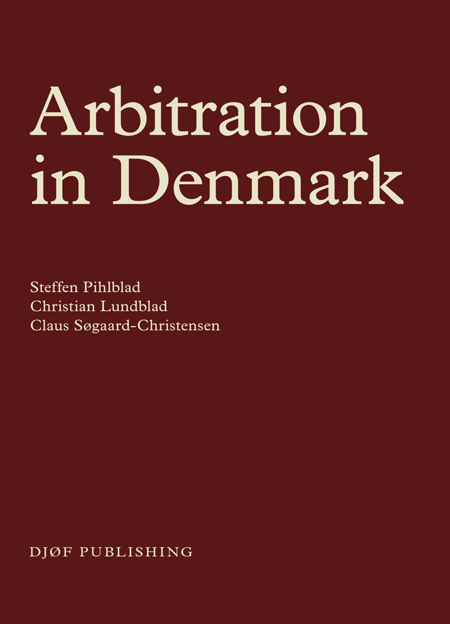
    Af Steffen Pihlblad , Christian Lundblad og Claus Søgaard-Christensen

    Cover til: Arbitration in Denmark (1. udg.)

    1. udgave

    5. september 2014

    • e-ISBN: 9788757497748
    • p-ISBN: 9788757427790
    • Antal sider: 211
    • Bogtype: Håndbog

    Emner

    • Procesret

    The aim of the book is to give an easily accessible presentation of arbitration in Denmark. The book is based on the Danish Arbitration Act 2005 (which is based on the UNCITRAL model Law) and the Rules of Arbitration Procedure of the Danish Institute of Arbitration, with the main emphasis on the latter. It is the intention that the book will serve as an introduction, especially for non-Danish lawyers and their clients who are or who expect to become involved in arbitration proceedings in Denmark. The book is also helpful for non-Danish lawyers and companies who are considering to enter into an arbitration agreement that requires that the place of arbitration is in Denmark. Finally, the book is useful to those who are appointed as arbitrators in international arbitration proceedings in Denmark. The authors are specialists in this field with substantial experience in domestic and international arbitration. Published with support from Dreyers Fond.

    • Bøger (Arkiv)
    • /
      Cover af Arbitration in Denmark
      Arbitration in Denmark
    • / 1. udg. 2014

    Arbitration in Denmark (1. udg.)

    Af Steffen Pihlblad , Christian Lundblad og Claus Søgaard-Christensen

    Cover af Arbitration in Denmark (1. udg.)

    Denne bog er ikke tilgængelig

    Du kan fortsat få adgang til bogen, ved at abonnere på Jurabibliotek.

    Har du allerede købt adgang? Log ind her